 Listicle
Are European Tilt and Turn Windows Worth It in Cold Climates?
Last Updated: November 17, 2026
Quick Summary
European tilt and turn windows are worth considering in cold climates because one handle opens them two ways: tilt mode lets fresh air in while the window stays sealed against the weather. Triple pane glazing, low-e coatings, argon gas and warm-edge spacers drive their cold-weather performance, and a proper installation determines how well they perform in practice.
- Tilt mode ventilates through the top of the sash without opening the lower sash to cold drafts.
- Check the NFRC-certified U-factor for the exact configuration, not just the marketing sheet.
- Keep indoor humidity between 30 and 40 percent in winter to limit condensation.
- Condensation between the panes signals a seal failure that needs repair or replacement.
- Install the sill pan and flashing first, and seal the perimeter in layers rather than with spray foam alone.
Table of Contents
- What Tilt and Turn Windows Are and How the Mechanism Works
- Triple Pane Windows Benefits for Cold Climates
- Top European Tilt and Turn Window Options Compared
- European Tilt and Turn Windows Cost: What Drives the Price
- Tilt and Turn Windows Installation Process and Winter Considerations
- Scheduling Your Window Replacement With J&A Innovations LLC
- Frequently Asked Questions
What Tilt and Turn Windows Are and How the Mechanism Works
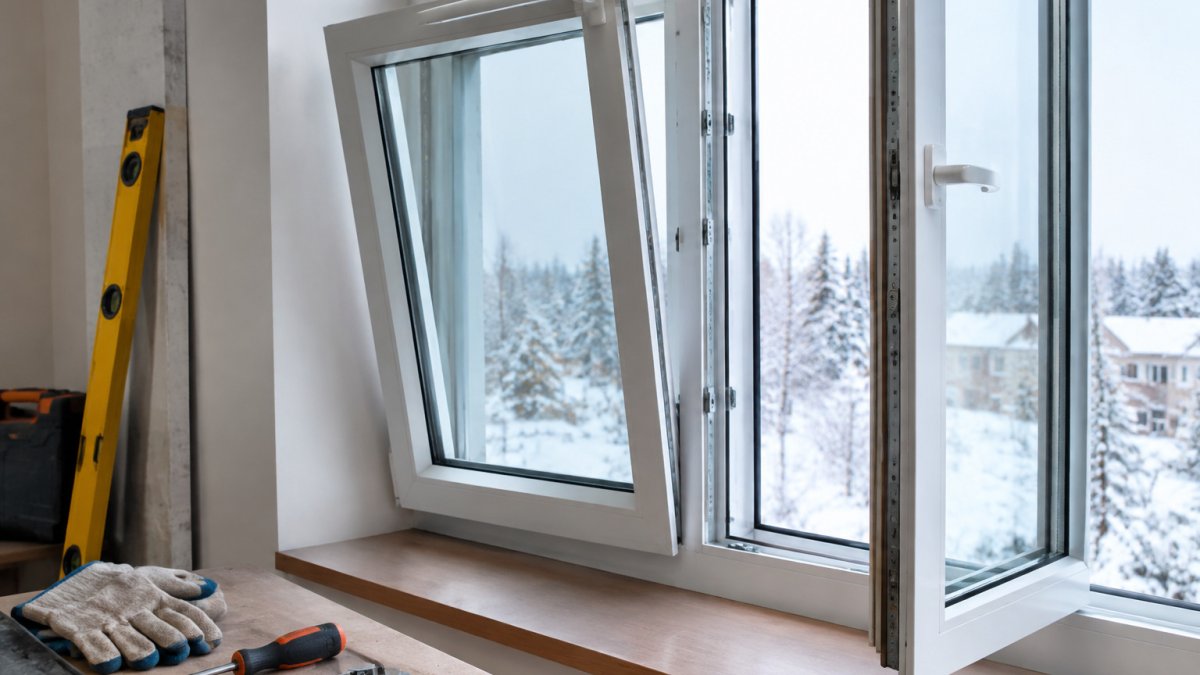
Tilt and turn windows are European-style windows that open two ways from a single handle. Turn the handle one way and the sash swings inward on a vertical hinge, like a door; turn it the other way and the top tilts inward at the head, letting fresh air in while the window stays closed against the weather.
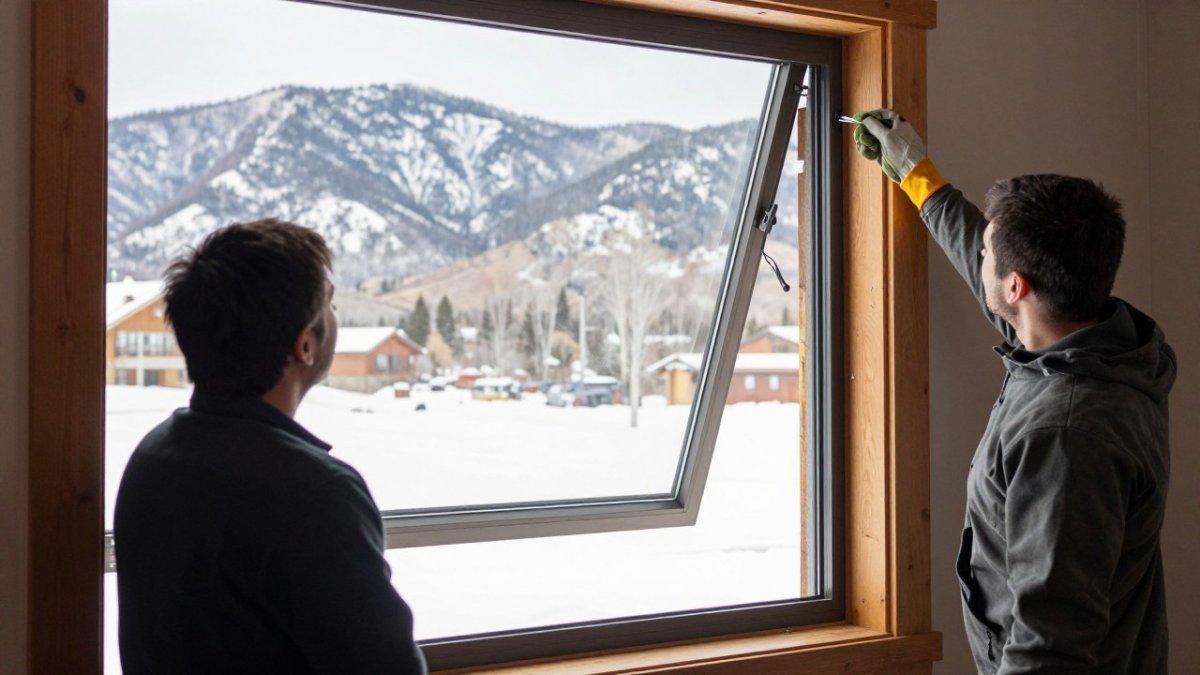
This two-way action is why homeowners in cold regions consider them: a tilt and turn unit lets you crack the top for air without opening the lower sash to the cold.
Tilt and turn operation explained
The mechanism relies on a multi-point locking system. When the sash closes, locking pins along the frame engage at several points, compressing the weatherstripping evenly all the way around, which is what gives these windows their airtightness.
In practice, a few things matter:
- Tilt mode opens the top of the sash inward at a fixed angle for ventilation, especially in winter when you want air without a cold draft at the floor.
- Turn mode swings the entire sash open like a door, useful for cleaning the outside glass from inside and for emergency egress.
- Hardware quality determines long-term performance. Cheap hinges and locking points wear, and a sagging sash will leak air no matter how good the glass is.
Watch out: tilt mode is not a substitute for a full-open window in a fire escape route. Confirm the egress size with your local building department before you count a unit as a bedroom exit.
Triple Pane Windows Benefits for Cold Climates
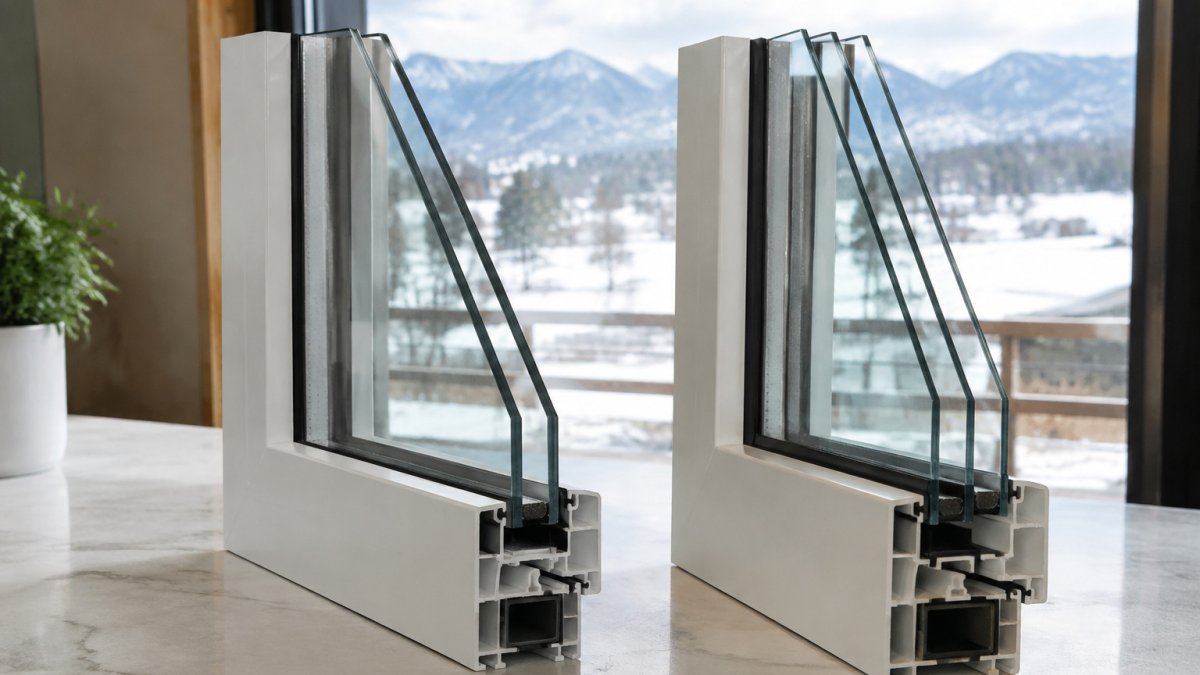
Triple pane glazing adds a third layer of glass and a second insulating gap, usually filled with argon. Less heat moves through the window, so the inside glass stays warmer.
The parts that actually drive cold-climate performance:
- Low-emissivity (low-e) coatings. A microscopically thin metallic coating reflects radiant heat back into the room. In cold climates it is typically tuned to keep heat in, though south-facing units may use a different coating to capture passive solar heat.
- Gas fill. Argon is standard because it is denser than air and slows convection between panes; krypton is used in narrower gaps. Gas can escape through seals over time, so spacer and seal quality matter as much as the gas itself.
- Warm-edge spacers. Older aluminum spacers conduct heat and create a cold band where condensation forms first; stainless-steel, silicone, or hybrid spacers reduce that edge effect.
The U-value matters most when comparing glazing: lower means less heat escapes. Many European units use triple glazing with low-e coatings. Check the certified NFRC label, not just the marketing sheet.
U-value versus R-value: what the numbers mean
These two numbers measure the same idea in opposite directions, and people mix them up often. U-value measures how much heat passes through a material, so lower is better. R-value measures resistance to heat flow, so higher is better.
When you read a window spec, check which number it uses. U.S. building codes and energy programs generally reference U-factor for windows, while R-value is more common for walls and insulation.
European manufacturers often publish U-values in metric units (W/m²K), while U.S. labels use U-factor in Btu/(h·ft²·°F). The numbers are not interchangeable without conversion, so ask the dealer for the NFRC-certified U-factor for the exact configuration you are buying.
Condensation management in extreme cold
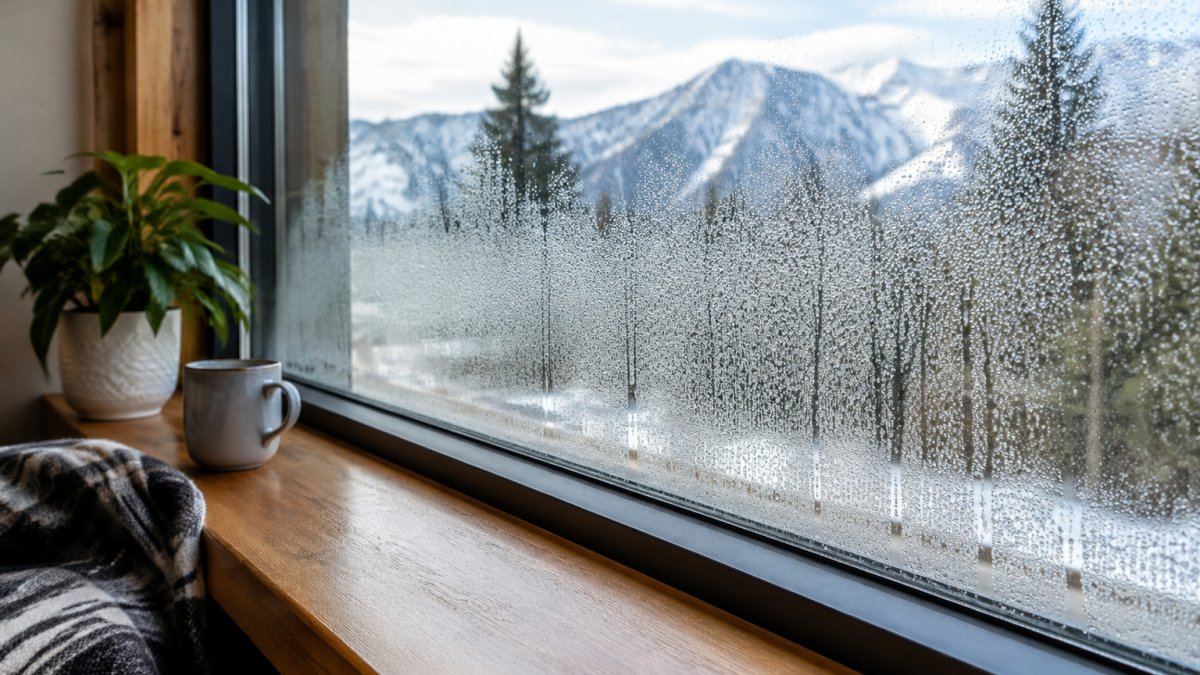
Condensation is the most common cold-climate complaint, and a tighter window can make it worse if humidity is not managed. Triple glazing keeps the inside pane warmer, which helps, but an airtight house with a lot of indoor moisture will still fog windows.
Practical steps that reduce the problem:
- Run exhaust fans during showers and cooking.
- Keep indoor humidity in the 30 to 40 percent range during winter.
- Use the tilt position for short periods to exchange stale, humid air.
Condensation between the panes means a seal failure, and the window needs repair or replacement. Surface condensation on the room side is a humidity issue, not a window defect.
Top European Tilt and Turn Window Options Compared
Several manufacturers sell tilt and turn systems in the United States. Pricing depends on the configuration, so verify current figures directly with a dealer or the manufacturer.
| Brand | Glazing Options | Best For | Pricing Model |
|---|---|---|---|
| Seemray | Triple pane with argon | Residential high-performance | About $280 per window (listed) |
| Zola Windows | High-performance thermal glass | Passive House and renovations | Custom quote |
| Hawkeye Windows | Enhanced thermal profiles | Replacing drafty windows | Custom quote |
| Kömmerling USA | Multi-chamber PVC profiles | New construction, energy code compliance | Custom quote |
| SwingTilt | Triple-pane standard | Harsh, windy, very cold sites | Custom quote |
| Schüco | Triple-glazed, high-security locking | Luxury and architectural builds | Custom quote |
| KLAR Windows | Triple-glazed | DIY-friendly renovations | Custom quote |
| WinDoorFull | Double and triple options | Budget-conscious projects | About $200 per window (listed) |
European Tilt and Turn Windows Cost: What Drives the Price
Pricing depends on opening size, glazing package, frame material, number of units and how much structural work the opening needs.
The factors that move the price most:
- Glazing package. Triple pane with argon costs more than double glazing.
- Frame material. UPVC and aluminum-clad options differ in cost and cold-weather performance.
- Opening size. Oversized openings need reinforced frames and sometimes new headers, adding engineering and framing labor.
For a current quote tailored to your openings, contact J&A Innovations LLC through the website. Get a quote before you compare brands, so you can see installed costs side by side rather than comparing manufacturer prices alone.
Tilt and Turn Windows Installation Process and Winter Considerations
Installation is where many tilt and turn projects succeed or fail. Our guide to what a window installation involves and how to choose an installer walks through each step and the questions to ask. The usual sequence: measure the rough opening, confirm the structure can take the new unit, set and shim the frame level and plumb, seal the perimeter with a membrane system, then test both tilt and turn modes.
Retrofitting versus new construction
Most American homes were framed for double-hung or casement windows, and European tilt and turn units are sized and installed differently, the single biggest reason a retrofit costs more than homeowners expect.
- Rough-opening dimensions. European frames are often deeper than American frames because the multi-chamber profile and hardware need the depth. If the existing opening is too shallow, the installer must modify framing or choose a shallower profile, which can compromise thermal performance.
- Sizing conventions. European units are commonly specified in metric dimensions and may not match standard American opening sizes, so a retrofit often means a custom-sized unit or adjusting the rough opening, both add lead time and cost.
- Mounting position. European windows are frequently set toward the interior of the wall rather than the exterior face American windows often use, changing how interior trim, exterior flashing, and sill pan are detailed.
For new construction, the framer can build the rough opening to the window manufacturer's spec from the start, which avoids most of these issues. For a retrofit, ask the installer to measure the existing opening depth, confirm the mounting position, and identify any framing changes before the order is placed.
Cold-weather installation sequence
Winter installation adds concerns. Sealants and foams need temperatures within the manufacturer's range to cure, so installers often schedule cold-weather work for milder days or use heated enclosures.
The sequence that holds up in cold weather:
- Protect the opening. Keep the rough opening dry and above freezing before the window goes in; a tarp or temporary closure prevents snow and ice from entering the framing cavity.
- Set the sill pan and flashing first. Water management starts at the sill, the pan and flashing must go in before the window so water drains out rather than into the wall.
- Shim and level the frame. Tilt and turn sashes are heavy and the hardware is sensitive to racking; the frame must be level, plumb, and square before fastening, or locking points will not engage evenly.
- Seal the perimeter in layers. Use membrane or flashing tape at the sill and sides, then low-expansion foam or backer rod with sealant at the interior. Do not rely on spray foam alone.
- Test both modes before the crew leaves. Open and close in turn mode, then tilt mode, and confirm the handle engages all locking points.
We recommend asking your installer these questions before work starts:
- How will the perimeter be sealed against air and water, and with what products?
- What temperature range do the sealants require, and how will you handle it on cold days?
- Who is responsible for structural changes to the rough opening?
- Will the window be tested in both tilt and turn modes before the crew leaves?
- How will the sill pan and exterior flashing be integrated with the existing wall assembly?
Watch out: do not let a crew fill gaps with spray foam alone. Foam without a proper membrane can fail to stop moisture and will not hold the frame in place on its own.
Scheduling Your Window Replacement With J&A Innovations LLC
At J&A Innovations LLC, we install European tilt and turn windows, including extra-large openings that often need engineering and framing support. We handle the structural work, install and finish in one project, so you deal with one team from first measurement to final check.
To start, request a quote through our website and tell us the number and size of your openings, the glazing you are considering and whether any framing will need to change.
Frequently Asked Questions
Can you buy European style tilt and turn windows in the United States?
Yes. Several European window systems are sold in the United States, either by manufacturers with domestic distribution or through specialty importers and installers. Availability varies by brand, and some lines are sold mainly through professional distribution rather than retail showrooms. Lead times for custom European imports can be longer than for standard domestic windows, so plan ahead for a renovation or new build. Ask any supplier to confirm which frame profile, glazing package and hardware set are included in a quote, and whether the windows are built to the performance ratings listed in the NFRC label.
What are the downsides of tilt and turn windows?
The main downsides are cost and complexity. A tilt and turn window has more hardware than a standard casement, so it costs more to make and install, and the hardware needs periodic adjustment and lubrication to keep sealing properly. Installation also requires care, because a poorly set sash will not seal evenly. Tilt and turn windows are generally not the cheapest option when you are replacing many openings at once, and lower-priced models may have lower thermal performance than premium triple-pane units.
Do triple pane windows make a difference in cold climates?
Triple pane windows with argon gas fill generally lower the U-factor compared with double-pane units, which means less heat escapes through the glass. In cold climates the warm-side glass surface also stays warmer, which reduces condensation and the radiant chill you feel near a window. The benefit depends on the whole assembly, including the frame profile, the spacer, and how well the sash seals, so compare the NFRC-rated U-factor for the complete window rather than the glass alone.
How much do European tilt and turn windows cost?
J&A Innovations LLC does not publish fixed prices, because the cost depends on window size, glazing package, frame material, hardware finish, the number of openings, delivery timing, and any structural work needed to enlarge an opening. For a firm number for your project, request a quote from J&A Innovations LLC on our website.