 blog
Best Windows for Colorado Mountain Homes: A Buying Guide
Last Updated: November 12, 2026
Quick Summary
Aluminum frames are often a strong choice for Colorado mountain homes, since they hold their shape through freeze-thaw cycles and expand far less than PVC. Wood-clad and PVC are solid alternatives depending on budget and style, and triple-pane glass pays off on exposed, high-altitude sites.
- Aluminum resists moisture and expands and contracts far less than PVC in temperature swings.
- Wood frames insulate well but need consistent sealing and repainting against snow and UV.
- Triple-pane makes less sense on mild lower-elevation sites, small windows, or tight budgets.
- Pressure-equalized glazing and capillary tubes help sealed units at elevation avoid early seal failure.
- J&A Innovations LLC has served the Colorado Rockies since 2008, handling engineering and framing.
Table of Contents
- Best Window Frames for Cold Climates and Mountain Exposure
- Triple-Pane Windows for Cold Climates: When the Extra Pane Pays Off
- Windows for Heavy Snow Loads and High-Altitude Installation
- Frequently Asked Questions
Best Window Frames for Cold Climates and Mountain Exposure
Aluminum frames are often a strong choice for Colorado mountain homes, with wood-clad and PVC as alternatives depending on budget and style. Aluminum holds its shape through freeze-thaw cycles, resists moisture, and expands and contracts far less than PVC when temperatures swing from warm afternoon sun to single digits overnight.
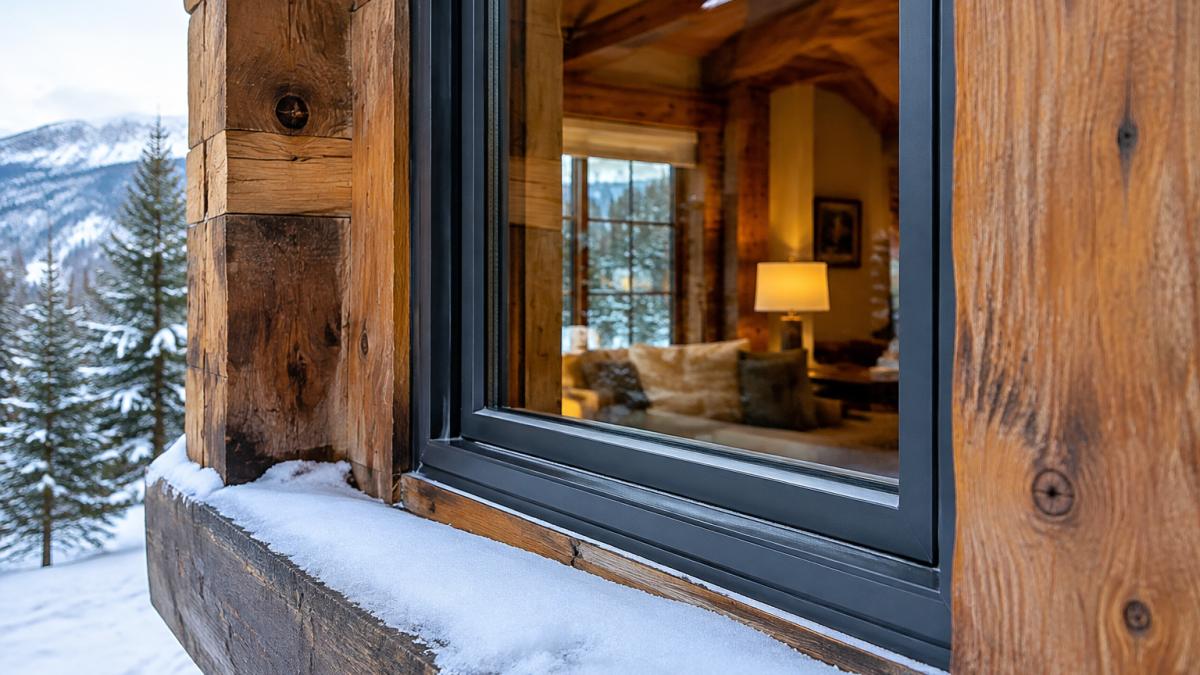
That matters at elevation. A common mistake is choosing a frame on looks alone, then watching it warp or leak within a few winters. Wood frames look beautiful and insulate well, but they need consistent sealing and repainting to survive snow and UV exposure. PVC is affordable and low-maintenance, though cheaper grades can crack in extreme cold. Wood-clad gives you a wood interior with a protected exterior shell, a solid middle path for homeowners who want warmth inside and durability outside.
Frame Material | Cold-Weather Strength | Maintenance | Best For |
|---|---|---|---|
Aluminum | Excellent, low expansion | Low | Extreme cold and wind |
Wood-clad | Very good, warm interior | Moderate | Character homes, style |
PVC | Good, varies by grade | Very low | Budget-conscious builds |
Solid wood | Good, needs sealing | High | Historic restorations |
Best for: homeowners who want a frame that survives decades of mountain weather. Skip if: you need the lowest possible upfront cost and accept a shorter service life.
Triple-Pane Windows for Cold Climates: When the Extra Pane Pays Off
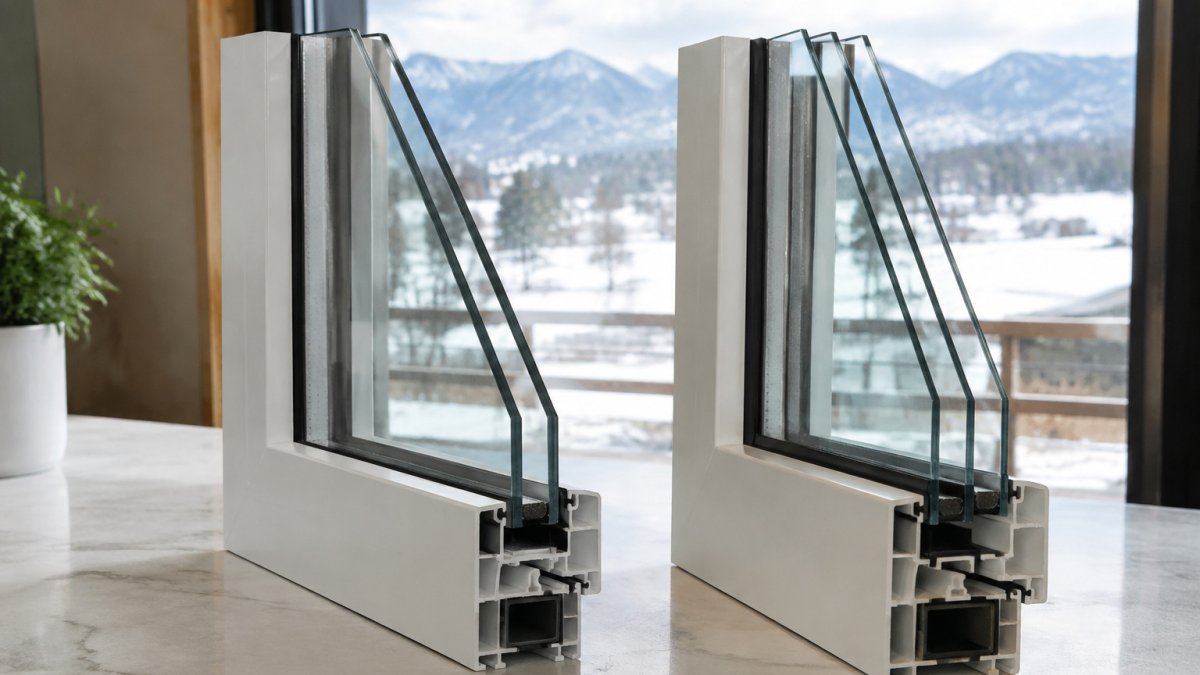
Triple-pane windows are worth the added cost when your home faces sustained cold, wind, and large view openings. The third pane adds an insulating layer that helps hold heat inside, reduces condensation on the glass, and cuts outside noise. For homes above tree line or on exposed ridges, that extra layer earns its keep.
Where triple-pane makes less sense: mild lower-elevation sites, small windows, or tight budgets where a well-built double-pane unit with a good Low-E coating and argon fill already performs well. The frame and installation quality matter as much as the pane count. A triple-pane window installed with gaps and poor flashing will leak cold air and collect condensation regardless of how many panes it has.
Watch out: condensation on the inside of new windows often points to air leakage or a failed seal, not the glass itself. Address it early before moisture reaches the frame.
Windows for Heavy Snow Loads and High-Altitude Installation
Heavy snow loads and high altitude demand more than a good pane. At elevation, the air pressure inside a sealed insulated glass unit differs from the outside, and that pressure difference can stress the seal over time. Pressure-equalized glazing and proper capillary tubes help the unit breathe and last. Skipping this detail is a common cause of early seal failure.
Structural strength comes next. Reinforced frames, correct anchoring, and flashing built for snow and ice keep windows sound when drifts pile against them. Wind exposure on ridges calls for rated assemblies and careful sealing. Installation is where most failures start: sloppy flashing, missed sealant, or undersized framing lets water in and shows up as rot and water damage years later.
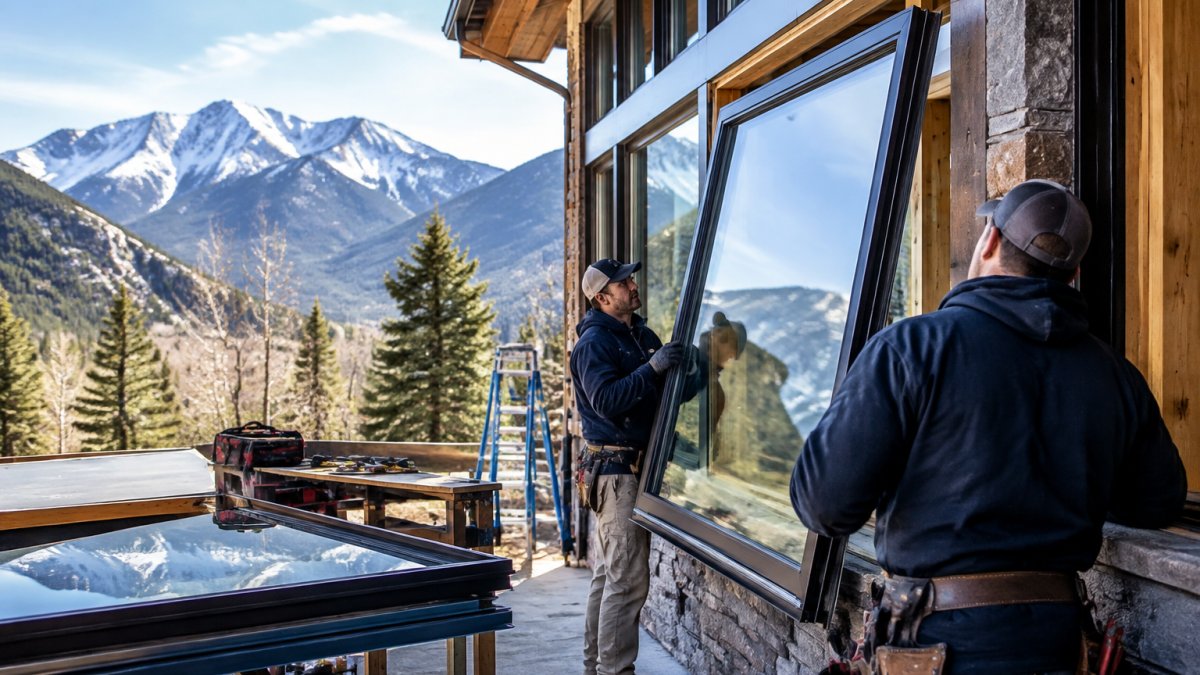
This is the work J&A Innovations LLC handles across the Colorado Rockies, from extra-large openings to full engineering and framing. Serving the region since 2008, we build installations to hold up to snow, wind, and freeze-thaw.
Choosing windows for a mountain home comes down to matching frame, glazing, and installation to your elevation and exposure. Get it right and the windows protect your home for decades. Get it wrong and you inherit leaks, drafts, and repair bills. J&A Innovations LLC brings precision installation, extra-large opening expertise, and on-schedule project management to every job. Get a quote and let us match the right windows to your home.
Frequently Asked Questions
What type of windows are best for Colorado mountain homes?
Aluminum frames with triple-pane, Low-E, argon-filled glass are the strongest all-around choice for Colorado mountain homes. Aluminum expands and contracts less than PVC in wide temperature swings, and triple glazing lifts the insulating value while cutting UV and solar heat gain. Match the U-factor and solar heat gain coefficient to the room's orientation: south and west windows need a lower SHGC to control summer heat, while north-facing glass benefits from the lowest U-factor you can budget for.
Are triple-pane windows worth it for mountain homes?
For most mountain homes, yes. Triple-pane windows for cold climates add a third pane and often a second gas-filled cavity, which raises condensation resistance and reduces heat loss through the glass. The trade-off is weight and cost, and very large openings may need reinforced framing to carry it. If your priority is stopping interior condensation and holding heat through subzero nights, the extra pane usually earns its keep over the life of the window.
How do you prevent window condensation in cold weather?
Window condensation in cold weather usually means the interior glass surface is dropping below the dew point. Fixes include upgrading to warmer glazing, sealing air leaks around the frame, running ventilation to move humid air, and keeping interior humidity in check during deep cold. If condensation appears between the panes, the sealed unit has failed and needs replacement. Persistent interior condensation on new windows often points to an installation gap rather than the glass itself.