 Ultimate guide
Triple Pane Windows Benefits for Cold Climates
Last Updated: November 7, 2026
Quick Summary
Triple pane windows are insulating glass units with three panes of glass instead of two, separated by sealed gaps filled with argon or krypton gas and finished with low-E coatings. The third pane and extra gas-filled chamber interrupt conduction, convection, and radiation, so the inner pane stays warmer, rooms lose heat more slowly, and condensation and frost are reduced. They suit genuinely cold climates like the Colorado Rockies, though they cost more and weigh more than double-pane units.
- Each pane sits in a sealed insulating glass unit held apart by two spacers, creating two separate gas-filled gaps.
- Lower U-factor means slower heat escape, so cold climates call for the lowest U-factor your budget allows.
- Payback is incremental cost divided by annual dollar savings, compared against the unit's expected service life.
- Fogging between panes means the seal has failed and the unit needs replacement, not a wipe-down.
- Vinyl is usually the least expensive frame; fiberglass and wood-clad aluminum run higher and need careful installation.
Table of Contents
- How Triple-Pane Windows Are Built for Cold Weather
- Insulation and Heat Retention: Why an Extra Pane Matters
- Winter Comfort, Condensation, and Interior Glass Temperature
- Double Pane vs. Triple Pane Windows: A Side-by-Side Comparison
- Triple-Pane Windows Cost and Payback in Cold Climates
- Triple-Pane Window Benefits and Disadvantages
- Best Triple-Pane Windows: Ratings, Frames, and Installation Quality
- Noise Reduction and UV Protection: The Overlooked Perks
- Planning Your Triple-Pane Window Upgrade
- Frequently Asked Questions
How Triple-Pane Windows Are Built for Cold Weather
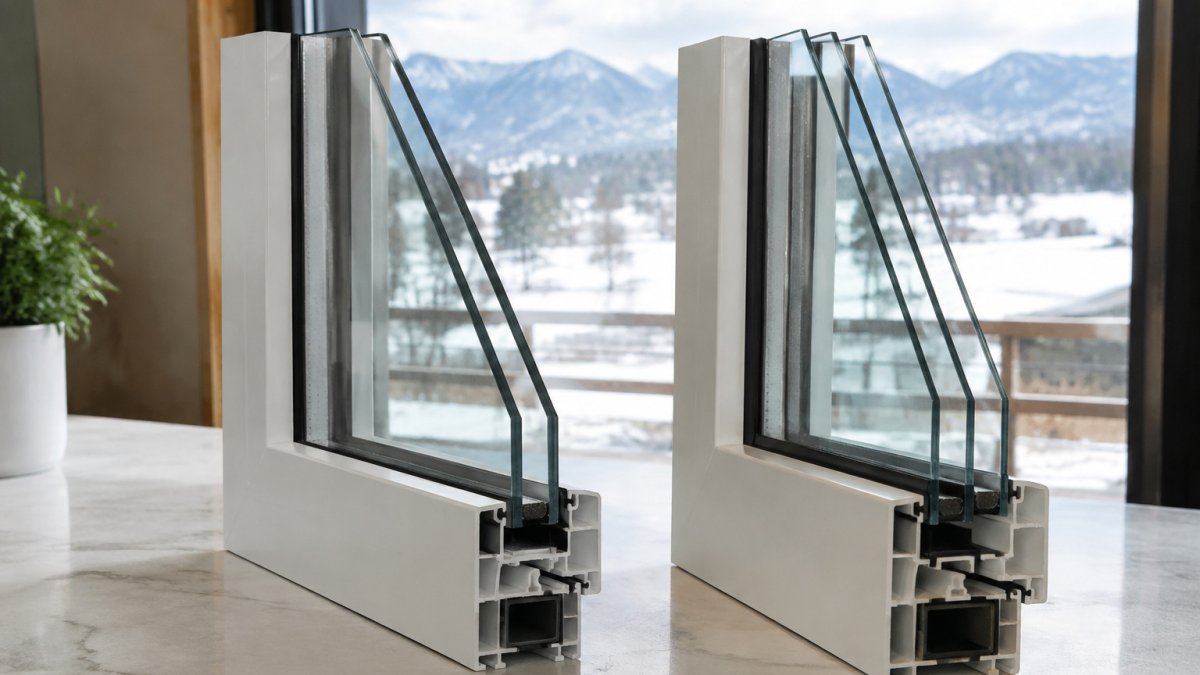
Triple pane windows are insulating glass units built with three panes of glass instead of two, separated by sealed gaps filled with argon or krypton gas and finished with low-E coatings. That third pane and the extra gas-filled chamber are what make them a serious cold-climate upgrade. These units are well suited to the Colorado Rockies, where winter design temperatures regularly drop well below freezing.
The construction matters more than the marketing. Each pane sits in a sealed assembly called an insulating glass unit, or IGU. Two spacers hold the three panes apart, creating two separate air gaps. Those gaps get filled with heavy, slow-moving gas rather than plain air. A low-E coating on one or more glass surfaces reflects radiant heat back into the room.
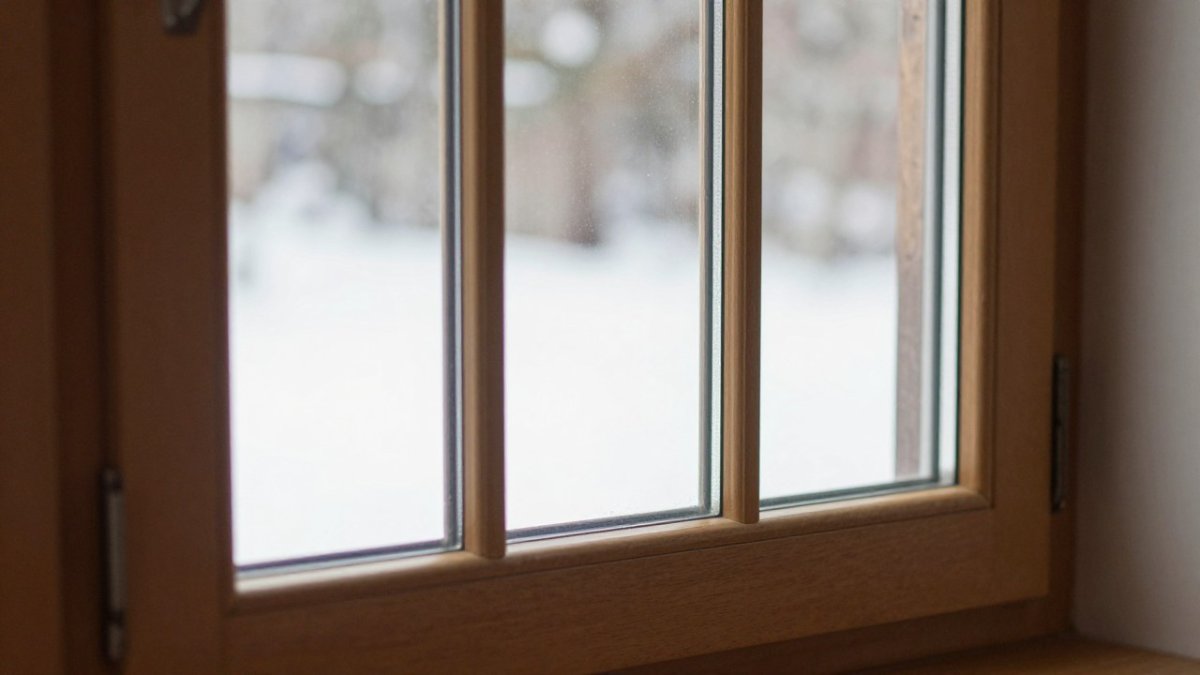
The insulating glass unit: panes, gaps, and gas fills
Think of the IGU as the engine of the window. The frame holds it, but the glass assembly does the insulating work.
- Panes: three sheets of glass, often varying in thickness to damp vibration and improve sound control
- Spacers: warm-edge spacers reduce thermal bridging at the glass edge, where condensation tends to form first
- Gas fill: argon is common and affordable; krypton performs better in narrow gaps but costs more
- Low-E coating: a microscopically thin metallic layer that reflects heat while letting light through
Insulation and Heat Retention: Why an Extra Pane Matters
Heat loss through a window happens three ways: conduction through the glass and frame, convection inside the gas gaps, and radiation across the panes. Each additional pane and gas layer interrupts all three. In practice, that means the inner pane stays warmer, the room loses heat more slowly, and the furnace cycles less.
The number that captures this is the U-factor, which measures how quickly heat escapes. Lower is better.
Winter Comfort, Condensation, and Interior Glass Temperature
Cold-weather comfort depends largely on how warm the interior glass surface stays, since cold glass pulls heat off anyone sitting near it.
Condensation forms when humid indoor air hits cold glass, and over time that moisture can damage sills and frames.
Watch out: condensation on a triple-pane window usually points to a problem, not a benefit. If you see fogging between the panes, the seal has failed and the unit needs replacement, not a wipe-down.
Double Pane vs. Triple Pane Windows: A Side-by-Side Comparison
The double pane vs. triple pane decision is the one most homeowners wrestle with. Double-pane windows have two panes and one gas gap; triple-pane windows add a third pane and a second gap. Triple-pane units generally cost more upfront and weigh more than double-pane units.
| Feature | Double Pane | Triple Pane |
|---|---|---|
| Glass panes | Two | Three |
| Gas-filled gaps | One | Two |
| Thermal performance | Good | Better |
| Condensation resistance | Moderate | High |
| Noise reduction | Moderate | Stronger |
| Upfront cost | Lower | Higher |
| Weight and frame demands | Lighter | Heavier |
| Best for | Mild climates, budget builds | Cold climates, comfort-focused homes |
Triple-Pane Windows Cost and Payback in Cold Climates
Most triple-pane articles wave at payback without showing the math. Here is a reproducible way to think about it, using your own numbers rather than a contractor's promise.
What drives the upfront price
Triple-pane units generally cost more than double-pane units, and cost depends on the specifics of each project.
- Glass area and configuration: large, custom, or non-rectangular openings require engineered framing and heavier lifting equipment.
- Frame material: vinyl is usually the least expensive; fiberglass and wood-clad aluminum run higher and demand more careful installation.
- Gas fill: argon is the standard, affordable fill; krypton performs better in narrow gaps but adds cost per unit.
- Installation scope: full-frame replacement with new flashing, trim, and interior repair costs more than a pocket replacement that reuses existing framing.
- Weight and structural work: triple-pane IGUs are heavy, and oversized openings may need header or framing reinforcement that shows up as a line item.
Because every opening differs, pricing depends on the specifics of each project. Request a written quote from J&A Innovations LLC for current pricing.
A payback method you can run yourself
Payback is annual energy savings divided into the incremental cost of upgrading from double-pane to triple-pane. You can estimate it in four steps:
- Find the incremental cost. Subtract a comparable double-pane quote from the triple-pane quote for the same openings. That difference, not the full window price, is what payback must recover.
- Estimate annual heating savings. A qualified contractor or a home energy auditor can model this from your window area, current U-factors, heating degree days, and fuel type. Treat any single-number promise as a red flag.
- Apply your utility rate. Savings in energy units only become dollars when multiplied by your actual per-unit heating cost, which varies by fuel and by region.
- Divide and sanity-check. Incremental cost divided by annual dollar savings gives a rough payback in years. Compare that against the unit's expected service life; if payback approaches or exceeds service life, the financial case is weak even if comfort improves.
Total cost of ownership, not just sticker price
A fair comparison accounts for more than the purchase price:
Be cautious of any contractor who quotes a specific payback period without first inspecting your home and measuring your windows, since payback varies.
Triple-Pane Window Benefits and Disadvantages
Triple-pane window benefits and disadvantages both deserve a straight look before you commit.
Benefits:
- Stronger insulation and heat retention in cold weather
- Warmer interior glass, so rooms feel comfortable
- Less condensation and frost on the glass
- Better noise reduction from the extra pane and gas layers
- UV protection that slows fading of floors and furniture
Disadvantages:
- Higher upfront cost than double-pane
- Heavier units that may require framing upgrades
- Not cost-effective in mild climates
- Seal failures are costlier to fix because there are more components
The honest verdict: in a genuinely cold climate, the benefits outweigh the drawbacks for most homeowners. In a mild one, they usually do not.
Best Triple-Pane Windows: Ratings, Frames, and Installation Quality
Choosing a window well depends on matching its ratings to your climate, its frame to your walls, and its installation to the opening.
Reading the ratings that actually decide cold-climate performance
Four numbers do most of the work:
- U-factor: the rate of heat escape through the whole assembly, frame included. Lower is better, and in cold climates you want the lowest U-factor your budget allows. Note that U-factor is the inverse of R-value, so a lower number means more resistance.
- Solar heat gain coefficient (SHGC): the fraction of solar heat that passes through. In cold climates a moderate SHGC lets low winter sun contribute warmth; too high a value can overheat south- and west-facing rooms in summer, so orientation matters.
- Air leakage: measured airflow through the assembly under pressure. Lower is better, and this is where sloppy installation and cheap weatherstripping show up first.
- Condensation resistance: a relative score for how well the unit resists interior condensation. Higher is better in cold climates, where warm interior glass surfaces are the whole point.
Look for units certified under the ENERGY STAR program, which sets performance criteria by climate zone, and consult the U.S. Department of Energy for guidance on window selection by climate. The National Fenestration Rating Council certifies the labels that carry these ratings, so check that the label is present and current.
Matching frame and glazing to the opening
Frame choice is a thermal decision, not just a style one:
- Vinyl: affordable and low-maintenance, but expansion and color options are limited.
- Fiberglass: stable across temperature swings and strong for large units, at a higher price.
- Wood-clad aluminum: warm interior appearance with a durable exterior, but requires careful installation to avoid moisture traps.
- Aluminum without a thermal break: a poor choice in cold climates because the frame conducts heat and invites condensation.
Why installation quality decides whole-window performance
A window is rated as an assembly, but its performance depends on how it is installed, including the frame-to-wall connection, flashing, insulation, and sealing.
- Missing or reversed flashing that lets water into the wall cavity.
- Gaps between frame and rough opening that are not insulated and sealed.
- Compressed or skipped weatherstripping that raises air leakage above the rated value.
- Inadequate structural support for heavy triple-pane units, which can rack the frame and break the seal.
J&A Innovations LLC handles engineering and framing for complex and extra-large openings. Serving the Colorado Rockies since 2008, we build with the whole assembly in mind.
Watch out: a failed seal shows up as fogging between the panes, and no amount of wiping fixes it.
Noise Reduction and UV Protection: The Overlooked Perks
UV protection is the quieter win. Low-E coatings block a large share of UV rays, which are the main cause of fading in hardwood floors, furniture, and artwork. In a sunny, high-altitude climate, that protection pays off over years of sun exposure.
Planning Your Triple-Pane Window Upgrade
Start with a room-by-room priority list. Request a written quote that specifies the unit ratings, frame material, and installation scope, and confirm pricing with J&A Innovations LLC before committing.
Ask three questions of any installer: How will you handle flashing and sealing? What happens if a seal fails? And can you handle the framing if my opening is oversized?
If your windows frost over every winter and your rooms never feel warm, the fix starts with a proper assessment. J&A Innovations LLC brings precision installation, engineering and framing for extra-large openings, and a schedule we keep, so your upgrade performs as rated. Get started with J&A Innovations LLC and get windows built for the cold.
Frequently Asked Questions
What are the disadvantages of triple pane windows?
Triple pane windows weigh more than double pane units, so frames and hardware must be sized for the extra load. They cost more upfront. In very mild climates, the added insulation may not pay back.
What is the best type of window for cold climates?
For cold climates, look for a low U-factor, argon or krypton gas fill, a low-E coating, and a frame with a thermal break. Also check air leakage ratings and choose a professional installation, because gaps around the frame can undo the glass performance.
Do triple-pane windows save more energy than double-pane windows?
Savings depend on your climate and current windows. The payback period is generally longer in mild climates and shorter where winters are long and heating costs are high.
How much more do triple-pane windows cost than double-pane windows?
Triple-pane windows typically cost more than double-pane units because of the extra glass, gas fill, and heavier frame. The difference varies by size, frame material, and glass coatings. Pricing depends on the specifics of each project, so request a quote from J&A Innovations LLC for current pricing.
Are triple-pane windows worth the extra cost?
In cold climates with long heating seasons, triple-pane windows may be worth considering, though the energy payback can take years. They are less compelling in mild climates or if you plan to move soon.
What are the benefits of triple-pane windows in cold climates?
Triple-pane windows improve insulation by adding a third pane and an extra gas-filled gap, which reduces heat loss and keeps the interior glass temperature higher. That means less condensation, fewer drafts, and better winter comfort near windows. They also reduce outside noise and block UV rays that fade furnishings. In cold climates, the combination of low-E coatings and argon or krypton gas fill makes the biggest difference in thermal performance.