 Ultimate guide
Are Energy-Efficient Windows for Mountain Homes Worth It?
Last Updated: November 5, 2026
Quick Summary
Energy efficient windows for mountain homes are worth it because they hold heat in during long winters, resist wind and snow loads, and manage intense high-altitude sun. The best cold-climate windows combine multi-pane glazing, a low-E coating, an inert gas fill, and a thermally broken frame. Look for a low U-factor, and let orientation guide your SHGC choice.
- Lower atmospheric pressure at altitude increases pressure across sealed glazing units, so glass thickness, spacer design, and unit construction must match elevation.
- South-facing glass collects free winter heat, while east and west glass collects harsh low-angle sun.
- Whole-window performance rates the complete assembly as installed, so installation quality matters as much as the product.
- Mountain weather adds snow load, wind-driven rain, freeze-thaw cycles, and UV exposure, so weatherstripping, flashing, and airtightness detailing decide performance.
- Pricing depends on quantity, dates, and delivery, so contact J&A Innovations directly for current prices or a quote.
Table of Contents
- Why Energy-Efficient Windows Matter in Mountain Homes
- Best Windows for Cold Climates: Glazing, Gas, and Frame Choices
- Window U-Factor and Solar Heat Gain Coefficient: Reading the Ratings
- How Altitude, Orientation, and Weather Affect Window Choice
- Installation Quality and Whole-Window Performance
- Cost, Payback, and What Drives the Price
- New Build or Retrofit: A Simple Decision Framework
- Frequently Asked Questions
Why Energy-Efficient Windows Matter in Mountain Homes
Energy efficient windows for mountain homes are glazing systems built to hold heat in during long winters, resist wind and snow loads, and manage intense high-altitude sun. J&A Innovations LLC serves the Colorado Rockies and beyond since 2008.
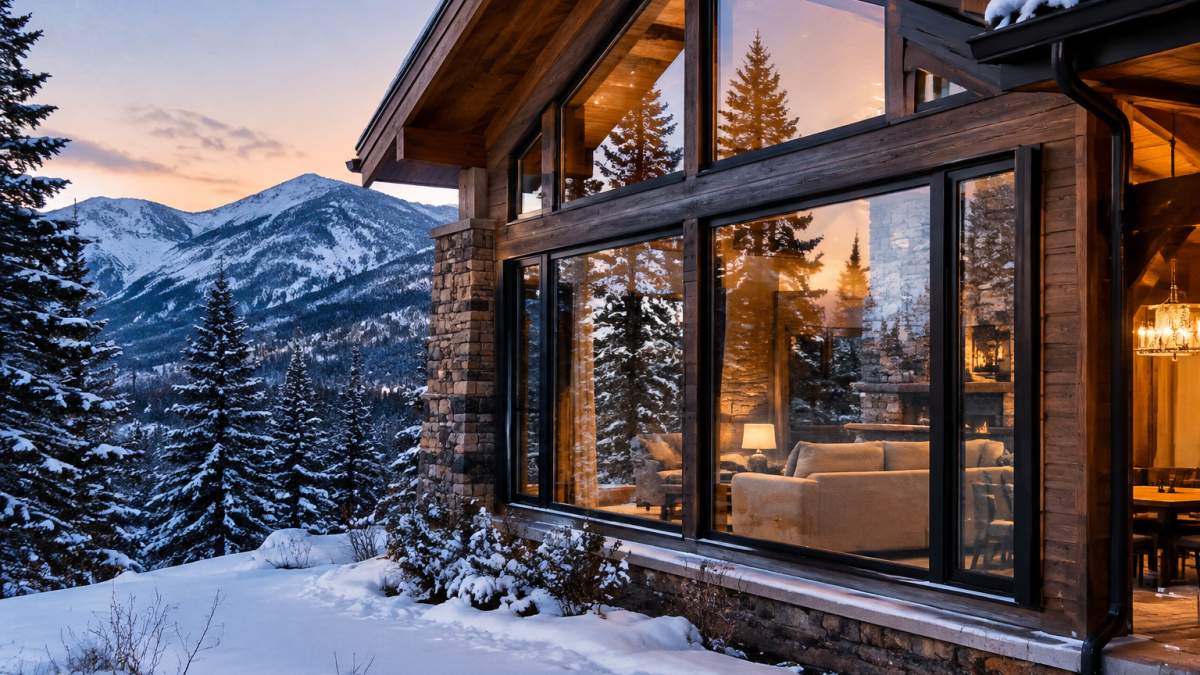
Best Windows for Cold Climates: Glazing, Gas, and Frame Choices
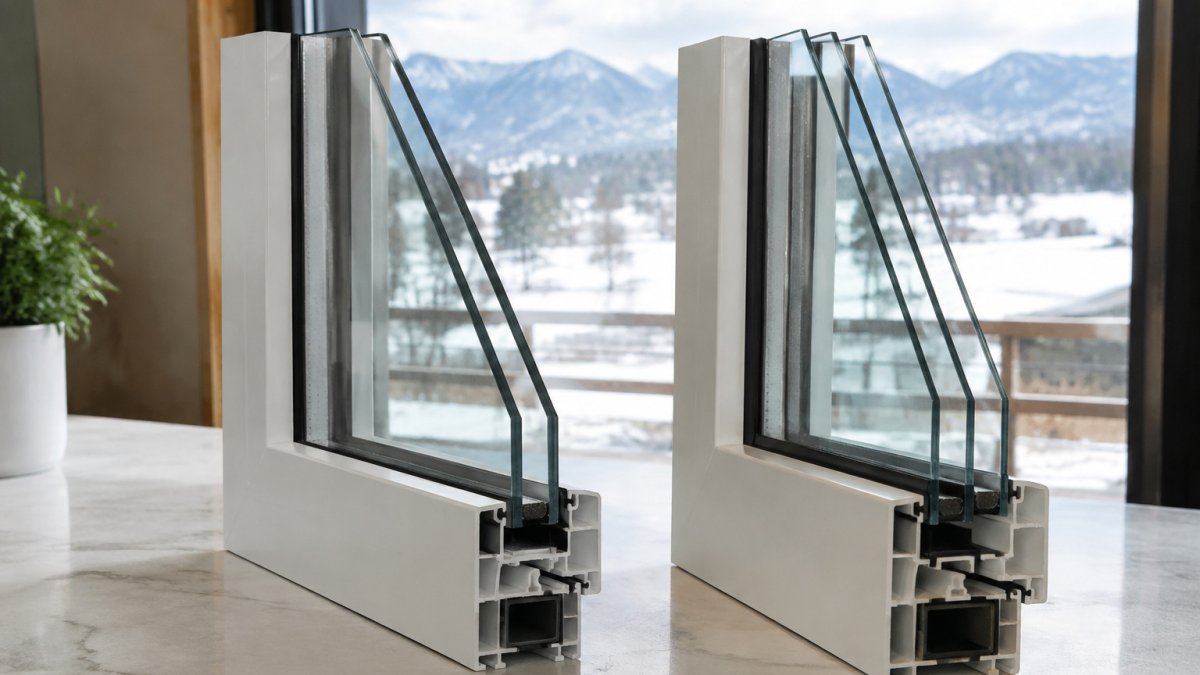
The best windows for cold climates combine multi-pane glazing, a low-E coating, an inert gas fill, and a thermally broken frame.
Glazing.
Coatings. A low-E coating is a microscopically thin metallic layer that reflects radiant heat back into the room while letting visible light through.
Gas fill.
Browse windows to compare glazing, frame, and style options.
Window U-Factor and Solar Heat Gain Coefficient: Reading the Ratings
U-factor measures how quickly heat escapes, and lower is better. Solar heat gain coefficient (SHGC) measures how much solar heat passes through, from 0 to 1.
For cold climates, look for a low U-factor. SHGC is trickier: a higher SHGC lets winter sun warm south-facing glass but can drive summer overheating, so orientation should guide the choice rather than one blanket number.
The ENERGY STAR program publishes climate-zone guidance for window ratings, and the U.S. Department of Energy explains how U-factor and SHGC interact. When you are ready to translate ratings into a plan for your own home, request your free quote today, and if you have questions about ratings or your specific house, contact us directly.
Two ratings do most of the work when comparing windows for a mountain home.
| Rating | What it measures | How to read it |
|---|---|---|
| U-factor | How quickly heat escapes | Lower is better; look for a low U-factor in cold climates |
| Solar heat gain coefficient (SHGC) | How much solar heat passes through | Ranges from 0 to 1; let orientation guide the choice |
How Altitude, Orientation, and Weather Affect Window Choice
Lower atmospheric pressure at altitude increases the pressure difference across a sealed glazing unit, so glass thickness, spacer design, and unit construction must match elevation; thin units can bow and seals can fail early.
South-facing glass collects free winter heat, while east and west glass collects harsh low-angle sun; seasonal shading and overhangs keep summer heat out without blocking winter gain.
Mountain weather adds snow load, wind-driven rain, freeze-thaw cycles, and UV exposure, so weatherstripping, flashing, and airtightness detailing decide whether energy efficient windows for mountain homes perform like they should.
Installation Quality and Whole-Window Performance
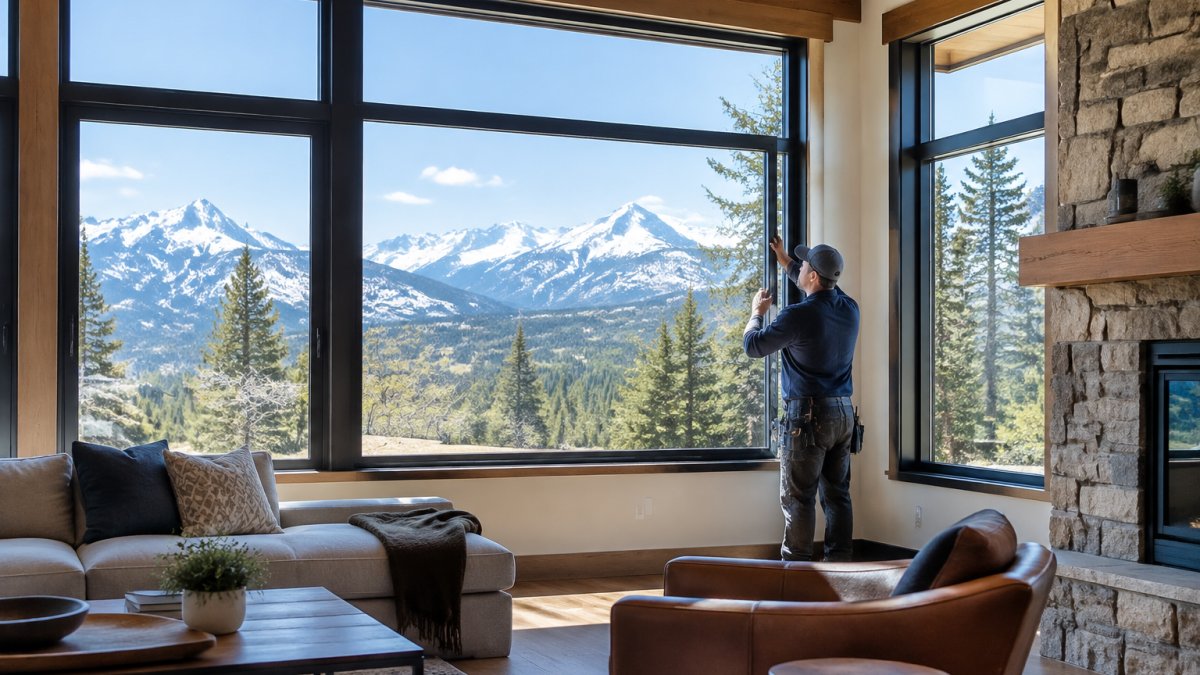
Whole-window performance rates the complete assembly, frame and glass together, as installed, so installation quality matters as much as the product.
Cost, Payback, and What Drives the Price
Pricing depends on quantity, dates, and delivery. For current prices or a quote, contact J&A Innovations directly.
New Build or Retrofit: A Simple Decision Framework
The photo gallery shows completed work in real mountain homes.
Frequently Asked Questions
What type of windows are best for mountain homes?
The best mountain home windows combine low U-factor, inert gas fills, and frames that resist thermal movement. Triple-pane windows with argon or krypton between the panes and low-E coatings perform well in cold, windy climates. Vinyl or clad wood frames reduce air infiltration and condensation. In high-altitude areas, specify glass units designed for pressure differences so seals do not fail prematurely. Professional installation matters as much as the window itself.
Are triple-pane windows for cold climates worth the extra cost?
Triple-pane windows for cold climates often justify their higher price in mountain homes where winter temperatures stay below freezing for months. The added glass layer and wider gas gap lower U-factor, reduce condensation on interior glass, and improve noise reduction from wind. The payback depends on your climate zone, window orientation, and how well the rest of the home is insulated. Compare U-factor ratings rather than pane count alone, since a well-built double-pane unit can outperform a poorly sealed triple-pane one.
How do I compare window U-factor and solar heat gain coefficient?
Window U-factor and solar heat gain coefficient work together. U-factor measures heat loss; lower numbers mean better insulation. SHGC measures how much solar heat enters; in cold climates, a moderate SHGC lets winter sun warm rooms while low-E coatings block harmful UV. For mountain homes, compare the U-factor and SHGC ratings of specific products and consider orientation when choosing glass. East and west windows may need a lower SHGC to prevent summer overheating. Always check the whole-window rating, not just the glass.
Mountain homes punish shortcuts, and windows are where it shows first. If you want glazing, framing, and installation handled as one engineered job, J&A Innovations LLC brings expertise in extra-large openings, complete engineering and framing, and installations built to stay on schedule. Get started with J&A Innovations LLC and get a quote you can plan around.